BBC Newsnight Review - Friday, April 27th


Great City. Shame about the BBC
For someone who has not lived in the city for more than a decade, the occasional trip to London is a reminder of how richly it deserves its new reputation as the world’s capital.
As my colleague James Harding wrote in times2 this week, there’s a vibrancy about London these days that easily eclipses New York or Paris or Tokyo. To many residents, perhaps, life in London may be a struggle against rising crime and a crowded Tube and overpriced housing, but from an international perspective, it is truly the world’s preeminent urban locale.
In fact, in anything other than the most literal, geographic expression of the term, London is really no longer an English city at all. Its great economic dynamo, the City, powers corporations from Shanghai to Seattle. Its labour force, drawn to it by the opportunities of its free markets, is much more polyglot and multinational than any other urban concentration in the world.
But there’s salt to this strawberry. London’s political culture has been uprooted from its English heritage. It is run — if you can call it that — by a sort of postmodern communist Mayor, whose political voice — minus the annoying nasal whine — would sound right at home in Paris, Bologna or San Francisco. It hosts a metropolitan elite that loftily gazes three ways: outward, at the supposed superiority of anything not British; inward, at its own ineffable genius; and down its elegantly pampered nose, at the provincial trivialities that consume the dreary lives of the rest of the population.
But worst of all; much more, much more baleful than any of these irritations, is the political, cultural and intellectual hegemony exercised by the ultimate self-serving metropolitan monopoly, the BBC. Much worse because, unlike mayors and snobs, its domination of the rest of the country is so complete and so permanent.On a recent trip back to Britain, I happened to hear on the BBC an interview with Helen Mirren, shortly before her Oscars triumph. Amid the usual probing sort of questioning that is the currency of celebrity journalism (“How do you manage to look so young? Is there anyone since Shakespeare who has come close to matching your talent?”) one particular gem caught my attention.
Dame Helen was asked how difficult it had been to play such an “unsympathetic character” as the Queen, the eponymous heroine of her recent film. She replied, quite tartly, that she didn’t find the Queen unsympathetic at all and launched into her now familiar riff about how she thought Elizabeth II really, surprisingly, quite agreeable.
It was a little incident, a small crystal in the battering hailstorm of drivel that pours daily through the airwaves. And yet to my mind it signified something so large. It had nothing to do with politics or Iraq or America. It was so telling in its revelation of prejudices and presumptions precisely because it was on such a slight matter as the sensibilities of an actress.
It betrayed an absolutely rock-solid assumption that the Queen is fundamentally unsympathetic, and that anyone who might still harbour some respect for the monarch — or indeed for that matter, the military or the Church, or the countryside or the joint stock company or any of the great English bequests to the world — must be some reactionary old buffer out in the sticks who has not had the benefit of the London media’s cultural enlightenment.
More than that, the question — all fawning and fraternal and friendly — contained within it an assumption that, of course, every thoughtful person shares the same view.
You really do have to leave the country to appreciate fully how pernicious the BBC’s grasp of the nation’s cultural and political soul has become. The groupthink and assumptions implicit in almost everything broadcast by BBC News, and even less explicitly by much else of the corporation’s output, lie like a suffocating blanket over the national consciousness.
This is the mindset that sees the effortless superiority, at every turn, of benign collectivism over selfish individualism, exploited worker over unscrupulous capitalist, enlightened European over brutish American, thoughtful atheist over dumb believer, persecuted Arab over callous Israeli; and that believes the West is the perpetrator of just about every ill that has ever befallen the world — from colonialism to global warming.
I’m often told, when I take on like this, that I’m ignoring the quality of BBC output. But I spent almost a decade in the employ of the BBC and I can say, without demeaning my gifted colleagues at The Times, that it has probably one of the highest concentrations of talent of any institution in the world. But that, of course, is the problem. It perpetuates its power by attracting and retaining an educated elite that is distinguished by its unstinting devotion to collectivist values. I’ve no doubt it does what it does very well. It is what it does I object to.
A necessary word here about our sponsor. Anything critical of the BBC written by an employee of Rupert Murdoch is instantly dismissed. It’s not an unreasonable instinct. Outside Murdochland it is solemnly assumed that each morning the drones of News Corporation are given their marching orders on how to interpret every event so that it conforms precisely to the commercial and political instincts of the proprietor.
In the real world, not only does the Murdoch media have only a fraction of the reach of the BBC, but a casual glance at its output demonstrates it is far less monolithic in its outlook than is the BBC.
Fortunately, in the US this week, I was struck by an article on the oped pages of The New York Times, the very citadel of leftish political correctness. Written by an apparently completely sane professor at a prestigious US university and entitled “Biased Broadcasting Corporation”, it assailed the BBC’s Middle Eastern services for their consistently antiWestern tone and content.
When the editorial pages of The New York Times accuse the BBC of anti-Western bias it is worth taking notice. It is a little like Osama bin Laden accusing Mahmoud Ahmadinejad of being a bit harsh on the Jews. It suggests that in other, even pretty unlikely, parts of the world, people are waking up to the menace to our values represented by the BBC. The British sadly, seem curiously content to remain in thrall to it.

Can We Trust the BBC?, the much anticipated book by the former BBC reporter Robin Aitkin, has finally been published, and, despite being predictably ignored by the BBC itself, it has once again brought under the public spotlight the ongoing debate about liberal left-wing bias at the corporation.
Aitken was a news reporter for 25 years, and the book deals solely with the BBC’s news and current affairs output and his experience of working in it, but at the same time, he makes the point that the outlook of the whole corporation is influenced by the culture which exists there.
In the chapter ‘Blowing the Whistle’, one of Aitken’s anonymous interviewees sets out what he says are the core beliefs at the centre of this culture. They are: anti-racist, pro-abortion, pro-union and anti-big business, pro-United Nations, pro-government spending, pro-multiculturalism and ethnic minorities in general, anti-Monarchist, anti-American and anti-private education and healthcare.
If this is true, then what, if anything, should we do about the BBC? To discuss this I’m glad to have with me writer and commentator Douglas Murray, TV producer and journalist Carol Gould, Social Affairs Unit author Adam Smyth and journalist Tessa Mayes.
Watch it on 18 Doughty Street

 New BBC Drama Party Animals aims to bring to the small screen all the fun, glamour and occasional misdeeds of the researchers, lobbyists, journalists and politicians operating in the Westminster Village. Is it an accurate in its portrayal and is it any good? Guests include Culture Clash regulars Dominic Hilton and Dawn Steeves, Robert Stuart Nemeth, researcher to Michael Gove MP and Damian Thompson from the Daily Telegraph. Hosted as ever by Peter Whittle.
To watch Culture Clash, click here
And more on the subject on Party Animals homepage

The New Culture Forum brings you the cultural news and events you can (not) expect to hear about in 2007, as brought to you by our contributors on the ground.
Let’s kick off with Christmas…
DEBENHAM ADMITS: WE DID NOT DESIGN CHRISTMAS”.
The retail giant Debenhams has retracted its “Christmas: Designed by Debenhams” television advert, after it decided it might be offensive to Christians. In the advert, a slim, sexy, modern-styled ‘DJ Santa’ glides and break-dances his way through rooms in his hi-tech grotto lined with robotic toys, perfumes, handbags, and other fashion accessories, before attractive women in stockings help send him out to deliver presents in a flying, high-powered snow ski. A company spokesman told reporters: “As soon as our executives viewed the ad, they realized that we had become so caught up in all the commercial opportunities of the festive season that we had lost sight of the true Christian message of charity and compassion. … We also recognized that some Christians might find our transformation of their beloved Saint Nicholas into a sex-crazed fashion victim, and our claim to have been the true originators of their historic religious festival, offensive.” The spokesman confirmed, however, that an equivalent advert,
“Eid: Designed by Debenhams”, with a similarly sexy, break-dancing ‘MC Muhammad’, would still go ahead in their stores in Bahrain, Kuwait, Qatar and Saudi Arabia: “The Islamic world is famed for its sense of gentle good-humour, and we foresee no problems there.”
[View ad here: http://www.visit4info.com/details.cfm?adid=39607]
(from David Brescia)
JANUARY
BBC News press release
Head of BBC News Peter Horrocks today banned the use of three key terms on BBC global news output - ‘suicide bombers’ ‘martyrs’ and ‘freedom fighters’. Horrocks made this unusual statement at the inaugural BBC Friends of Israel fundraising dinner. As well as raising thousands of shekels for Israel to spend on reinforcing the controversial security fence, Horrocks said in his after dinner speech ‘it is time the BBC recognises that homicide bombers in the middle east have the same motives as homicide bombers in the west’ and ‘are nothing but barbaric murderous scumbags acting under a veil of pseudo religious nonsense’. Horrocks then sang the Israeli national anthem as a solo before inviting Baroness Jenny Tongue onto the dance floor for the first Chassidic dancing number ‘We want moshiach now!’.
(from Jonathan Levi)
To celebrate the West's abolition of slavery 200 years earlier, Islam decides to join in, apologising for enslaving more people than the West ever managed and for perpetuating slavery into the present day in countries such as Mauritania. 'This one's been on the books a bit too long,' laugh Ayatollah Khamenei and Yusuf Al-Qaradawi at a joint press conference.
(from Mark Sidwell)
FEBRUARY
BBC, CHANNEL 4 ANNOUNCE FACTUAL PROGRAMMING HIGHLIGHTS
BBC Panorama, tonight, 'teaching sex to kids': how a half-century of UK sex-education has pushed us to the top of Europe's teen pregnancy tables. We ask the Department of Education why it thinks more of the same will now produce different results?
- C4 'Unreported world', 'Castro's Gulag': We get unique access to Cuban dissident groups inside Cuba who show us the true extent of the dictator's repression of writers, thinkers and journalists.
Also 'A Bolivarian blunder', Is Chavez driving Venezuela to ruin and isolation?
- Dispatches: 'A Comprehensive failure': with childhood illiteracy increasing - and entry of poorer students to top universities at a post-War low - we ask whether it's now time to 'permanently exclude' Britain's greatest educational mistake - the comprehensive school.
- C4 News special, 'The Bush tax miracle': how American economic growth has been powered by tax cuts.
- BBC File on four, 'The end of the road for the Human Rights Act?': In order to cope with the terrorist threat, is it time to admit the damage caused by the Human Rights Act, scrap it and re-introduce effective national treason laws?
(from Alan Smithee)
MARCH
THOUSANDS CONVERGE ON WEMBLEY AS ROCK STARS RAIL AGAINST CHINA
Madonna last night led a glittering array of stars from the world of rock and pop in a massive protest concert at the continuing of human rights violations in China. She told the crowd: ‘Chairman Mao caused the deaths of 70 million of his own people. Well Communism is dead but the torture goes on! Make torture history! Rock against China!
(from PW)
APRIL
In an astonishing new play at the National about multiculturalism which looks set to draw angry protests from Muslim groups, a white couple in a largely Asian town see their gay son sacked from his job as a teacher because Islamic fundamentalist parents do not want him teaching their children. Terrified of causing offence, the local council fails to intervene, leaving the angry and frustrated family to deal with a media firestorm. The play, which opened this week, has already sold out, and the theatre has also been encouraged by the proportion of so-called ‘first-time’ ticket buyers. ‘This play is bringing in a whole new audience to the National’, said a spokesman. ‘We’ve been trying to widen our audience over the years with the £10 ticket scheme, and that’s been a real success especially with students, but for some reason the subject of this production has really struck a chord with people who would not otherwise go to the theatre.’
(from PW)
MAY
Leading figures from the arts and media address huge London rally
A massive crowd of moderate Muslims, estimated at nearly half a million, yesterday heard stars of stage, screen and the literary world call for an end to the subjugation of woman and gay men under fundamentalist Islam. Carrying banners declaring ‘Not in Our Name!’, thousands of protesters listened peacefully in the capital’s Hyde Park as figures including feminist Germaine Greer, National Theatre director Nicholas Hytner and Oscar-winning actor Sir Ian McKellen made impassioned speeches condemning the wearing of the burkha, the execution of thousands of gay men in Iran and the increasing tolerance in Britain of what Sir Ian dubbed in his speech ‘vicious attacks on our liberty’.
Interviewed after the event, Germaine Greer underlined how important it was that women in the West stood up to such reactionary forces. ‘It’s the duty of feminists everywhere to speak out in support of women who live lives of total subservience – women whose voices will never otherwise be heard.’
(from PW)
JUNE
Yasmin Alibhai-Brown admits that juvenile relocation to Mayfair, and its attendant reduced knowledge of traditional Malawian songs, dances and agricultural techniques, may be preferable to dying alone, disease-riddled and abandoned in an African orphanage.
(from Emma French)
JULY
Carbon neutral is a load of hippie bollocks," announced Chris Martin, last night, to a stunned audience of Coldplay fans.
"Sorry guys, but the fact is I got it all wrong. This save the planet stuff I've been preaching at you for the last five years - it was just hot air. Al Gore is a mendacious loser twat. Michael Moore is a fat, lying, treacherous c***. An Inconvenient Truth is the worst film ever, worse even than Love Actually or that other terrible Richard Curtis one about the Scottish girl at the G8 summit who converts everyone to eco-fascism. The Rainbow Warrior had it coming. Greenpeace are tossers. Global warming is due primarily to solar activity, perfectly normal and nothing to worry about. Wind turbines are crap. Nuclear is our only hope."
After a climactic performance of Yellow, Martin further shocked fans by urinating on a copy of Kyoto agreement, before driving off in a 4 x 4 with wife Gwyneth Paltrow chic in pure sable fur) and chums Thom Yorke and Michael Stipe (both engrossed in Douglas Murray's Neo-Conservatism: Why We Need It?)
(from James Delingpole)
AUGUST
Gwyneth Paltrow abandons her ‘macrobiotic diet’ in favour of a new diet dependant exclusively on conventionally grown Genetically Modified Organisms.
(from Dawn Steeves)
SEPTEMBER
Ekow Eshun says something cogent and to the point on Newsnight Review
Male character on advert/in sitcom shown not to be a bumbling fool; female character revealed to be something other than a long-suffering omnicompetent.
(from James Delingpole)
OCTOBER
Spooks finally broadcasts an episode in which it really is the Islamists who are baddies and not Christians/Big Business/Jews masquerading as Islamists so as to give these peace-loving people a warlike reputation they SO do not deserve.
Bono admits: "What do I know? I'm just a rock star."
(from James Delingpole)
NOVEMBER
‘We are a waste of taxpayer’s money’, declares Disability Rights Commission
‘There’s a lot to be said for the occasional slap’, NSPCC counsels parents
Muslim Council of Britain condemns suicide bombers
Arts Council launches new fund for middle class whites
(from Nick Seddon).
DECEMBER
Channel 4 announces that it’s Alternative Christmas Message this year will be given by Dr John Sentamu, the Ugandan-born Archbishop of York known for his outspoken support of Christianity and the celebration of British Culture. When questioned about this unusual choice, a Channel 4 spokesman said candidly: ‘We always aim to be provocative, and so we thought it would be really daring to use the Archbishop. Frankly, all the old counter-culture ‘alternatives’ are pretty much mainstream culture now, and rather than just be known as one of Oriana Fallaci’s ‘phoney revolutionaries’, we thought we’d really try to stir things up.’

Stephan Shakespeare, founder of YouGov, is the man behind the creation of 18 Doughty Street Talk TV, the first British TV channel on the Internet.
18 Doughty Street was launched in October this year. Unencumbered by the traditional requirements of so-called 'balance', it promised to offer something completely new. So has it?
Peter Whittle (who hosts the channel's Culture Clash programme) talked to Stephan about the first months 'on air.'
NCF: Stephan, on its launch literature 18 Doughty Street had the following quote from Orwell: ‘In a time of universal deceit, telling the truth becomes a revolutionary act.’ Do you think that 18 Doughty Street is telling the truth?
S: I don’t think that anybody can know that they are telling the truth in that way, but I think that people being able to speak without constraint will get us closer to it. I think the nearest we can get to the truth is if people with different points of view, and different experience, can discuss things in a context where they feel really they can say whatever they like, where they don’t have to play up to an audience, or play up to a regulator, where they don’t have to worry who they please and who they don’t please. I don’t think anybody can pronounce on what’s true and what’s not true. I think any consensus is going to be right 70% of the time and wrong 30% of the time. The best way you can counteract that is to have lots of voices, and lots of people choosing which voices they want to hear, which voices they want to balance, and how, and you have this collective wisdom of crowds that determines the best guess. Doughty Street is just another place where people can talk and discuss, but what can be different is that they don’t have a false concept of balance and boundaries.
P: So do you think it is being different?
S: We are at the very early days of 18 Doughty Street. When we started this, we had some ideas about how we wanted it to be. Then we came up against the constraints of production teams, and so on, saying this is possible, that is not possible, and they’ve come from their own background in TV production and they put constraints on us of a different kind, which we are just learning how to go beyond. When we started this, I always had the view that you can spend six months or a year planning how this would be, and then launch, or you can just launch without any idea how it’s going to work and then look at it after six months and do it again, as it were. And that second route is very much what we’ve gone down. We just said ‘Let’s get started, we don’t really know how this is going to work’. It’s actually unknowable how it is going to work, because people are not used at watching TV on the Internet. Let’s just get started, and as we go along, we will make some mistakes. It will become more obvious in the doing that it would ever have been planning in the abstract.
P: 18 Doughty Street was mooted as ‘anti-establishment television’, and I think my immediate reaction when I looked at this was that it would be against the kind of vaguely left/ liberal orthodoxy which dominates. Is that how you see it?
S: I think that is how I see it. I think an establishment orthodoxy certainly does exist. I don’t think it’s all powerful, and I don’t pretend we live in a world where there are no platforms for alternative voices. But there is such a magnetic pole to the mainstream, and that mainstream is dominated by, as you say, a sort of leftist liberal outlook. I don’t mean leftist as in socialist, but I would say it is a set of attitudes. I would say there’s a need for something which is outside of that, and that plays against that.
What I find extraordinary is the degree to which there has been outside interest in this, and favourable reviews of it. The output at the moment is terrific, as far as it goes, but it is early days, and the most notable thing about it is how generous everybody else has been prepared to be about it. Probably it’s because they do perceive a striking need for this.
P: Have you any idea of how many people are actually watching it?
S: I don’t think the audience on any particular night breaks beyond a thousand. It’s a small audience - very much the sort of political media world - but we’re not going to push it, or market it until we are ready, until we’ve found our feet, so that’s exactly what we would expect, and what we would have assumed. At the moment, the website, for example, is an embarrassment, it is not only a not very good website, it is a terrible website – you can’t do the basic things, blogging alongside watching and having links to all the things you can download in a clear, simple way. To be fair to the people who designed it, we probably gave conflicting messages as to what we wanted, and it’s resulted in this. On the 8th of January, all that will be re-launched, it will now be designed on the basis of what we know about what we want to do, and at that point, we will be able to market this out beyond the niche audience we have at the moment, and that is very clear in our minds, that in a way we don’t want to drive lots of people to it at the moment, when the look of the studio is changing, the websites are changing, and the schedule is going to be changing. We are treating this as a sort of Beta phase, and then on the 8th March we are going to be much clearer about what the whole thing looks like, and how it functions, and at that point, we can push it out and go for a wider audience.
P: Will it be markedly different in term of the presentation, apart from the website?
S: I don’t think it’ll be markedly different in term of what you see. There will just be a lot more, and a lot of different things, in addition. That’s to say, I don’t think that anything that we’ve done hasn’t worked. I think the pre-recorded programmes (ie those in the 8.30 slot such as World View and Culture Clash) have all been terrific discussions, bar none. Any one of those discussions, if you heard them on Radio 4 in the afternoon would have been at the very least as good as anything you hear there, and at the most, markedly different. For example, the discussion on Culture Clash on what was described as cowardice in the face of Islamic fundamentalism had a passion and yet a rationality, a fairness about it, that really attacked a certain attitude that’s prevalent in the media, and you wouldn’t have heard that anywhere else in the media because there, even if you had had one person advocating that point of view, you would have had to have a balance with two or three people saying what a lot of nonsense. I think it’s terrific if you have a discussion if people take different points of view and challenge each others points of view – but if that challenge is always coming from a predictable ‘bring it back to the safe area’ position, you are never going to get a proper discussion, because what happens, and we see it on Newsnight, night after night, is that everybody involved entrenches very quickly to their predetermined positions, because that is what happens with all human beings when you challenge their position. You know, you make a point and I immediately say ‘That’s completely wrong, it should be this’. Instead of going to a next point and exploring those ideas, you are going to start justifying what you’ve said, trying to make the viewer think that you are right, and the other person is wrong. Now if you don’t need to do that, if the rest of the people in the discussion perhaps disagree with you but actually do so in a way which you welcome because you want to develop your idea, that discussion becomes more exploratory, discursive, and ends up in a different place. You really feel you’ve been around the subject, rather than watching two or three people who are intent on pushing each other into their original corners.
P: I’ve stopped watching Question Time because there’s this kind of monolithic, predictable viewpoint which come across from the whole panel. I wonder, with 18 Doughty Street, would there be views that you wouldn’t have on? How free do you want to be? We’ve heard this week that the BBC was thinking of putting on extreme voices – they mentioned the Taliban, and the BNP as examples. Would you do that?
S: Number One, I wouldn’t design it that way, and I think there’s something fundamentally wrong with that design where what you’re saying is ‘yes, we do have a narrow channel of conventional discussions, and to balance that we’re going to have two outriders to have a go at each other.’ That doesn’t work, so I wouldn’t begin with that design.
I have to say in practical terms, if somebody said we would like to invite the leader of the BNP, I would say ‘Let’s not’. Somebody else can do that, it’s not a voice that I think I would want to give a platform to. What Doughty Street isn’t doing is saying, this is a place for all other voices. We are free to make our choice, and we are free to say actually I don’t want to hear from a certain position, and that goes back to my first point, about lots of different platforms among which you can make your choice about. Somebody else can start their own Internet TV – and they will – and if they want to have the BNP on it that is up to them, but I don’t feel that I need to do that. It is not something I would feel comfortable with. The beauty is we don’t have a responsibility to something else, we don’t have a responsibility to say ‘the BBC doesn’t do that, so therefore we will do all the things that the BBC doesn’t do.’ We only have a responsibility to do the things that we want to do, because it pleases us.
P: 18 Doughty Street made it clear it didn’t want to be Tory TV. But – not that you should care – do you know how the Tory party views it?
S: It can’t be Tory TV for the simple reason that not all of us there are card carrying Tories, and even if we were, we wouldn’t necessary want to add to this centralization of power that is already existing in politics. I am a Conservative Party member, and I would much rather see a Conservative government than a Labour government, but I wouldn’t want to add to the disproportionate strength of party hierarchies. I think that is part of the problem. It’s completely reasonable – I am not making an attack on that in this sense and I wouldn’t expect them to do anything different from what they are doing, because that is why they are leading a party. But it is up to the rest of us to make sure that there are other platforms, other voices, other strands of discussion that people can join.
P: If you’re talking about anti-establishment TV, especially from right of centre viewpoint, it would seem to imply that it is sort of against, or looking at a another kind of conservatism that is not necessarily Cameroonist if you like. Do you think that this is a voice for dissent for conservatives?
S: In as much as it is a voice for any kind of dissent, yes. In as much as it is, as what you’re suggesting, an anti-Cameron thing, absolutely not. We have lots of people on who are 100% loyal to David Cameron, or indeed to Menzies Campbell or Brown or Blair. And we have people who are not. That seems to me the right thing that a discussion platform, a media platform would seek to do. I hope it will never be a home for discontent with any particular leader or politician or whatever and I don’t think when you view it, it is that at all. The vast majority of people who come on to the programme do wish David Cameron every success, they probably just wish he would be successful in slightly different ways or in slightly different areas. We hear a lot about what a modern political party is now, and a modern political party, it seems to me, would, yes, try to provide leadership and some discipline but also accept that they’re functioning in a world in which the audience, the public, is distrustful of politicians, and feels patronised and manipulated. Therefore they should welcome other voices. And to be fair, they have done exactly that. ConservativeHome which is related to 18 Doughty Street has had a huge amount of, I won’t say support, but cooperation from the Party, which doesn’t seek to make it change its views, nor does it do the opposite, of accepting it as being part of themselves. They see it exactly for what it is, which is another voice, broadly supportive but there to widen the discussion.
P: Going right back to the beginning, can you just explain how you first came up with the idea for 18 Doughty?
S: A number of things I was watching came together at the same time. I was in America flicking around channels as one does, and came across some very obscure channel - I have no memory of what it is or what they were talking about – but what struck me was the way it was done. It was in fact a radio station, in which they set up a single camera in the corner of the room to beam as it were as a TV station permanently what was going on in the studio. So you listened to it as a radio station but you could look up and see who the people were who were talking, you could have a bit of the behind-the-scenes feel. And I thought this was terrific, it really worked, because if I wanted to be sitting for an evening television, I would not watch a single camera on a radio station, but if I was moving around the room doing stuff, it is almost a different way of watching radio – and I thought that must be very low cost, and it works really well. So that was one thing which was in my mind. I had been interested for some time in Big Brother obviously, and my conception of Doughty Street would be a little bit like a Big Brother house – I’m exaggerating the comparison massively - but what I mean by that is that you would be watching in and be able to interact with people in the room having a discussion, and I think as time goes on we are going to increase the sort of coverage of what goes on in the house - not just increase programme as such.
P: So the house at 18 Doughty Street will be more than a TV station?
S: I think that is what is going to happen. We are looking at putting a camera in the kitchen, a camera in the green room, as it were, to be able to switch to a discussion that is going on there. I think if you were to have a conventional editorial meeting that ought to be beamed live to whoever’s there. People could be watching and come in with suggestions as well.
P; what are the other things you are planning to do?
S: We are looking to increase audience participation greatly by bringing in the creativity and the critical intelligence of our audience in the designing and making of products for Doughty Street. It will be, this is what we are thinking of doing, we would love suggestions from you, then we will discuss the suggestions, have input on the discussion, come to some sort of agreement about what this new format should look like, start doing it, get feedback on it, change it, so that in other words the audience is absolutely a part of making the programme, not just through interacting with the programme once it exists, but actually from the conception through to the final product.
P: 18 Doughty is the first of his kind in this country, isn’t it?
S: I think it is the first of its kind, anywhere, in this way. Clearly it picks up on strands that have existed on the Internet, but I can’t think of anything that is like Doughty Street – or that is like what Doughty Street intends to be. We are nowhere near the place that we will be, I think, within six months.
P: The US still has a culture war, with its shock jocks, but here there’s been something of a rout. Is 18 Doughty a first shot across the bow?
S: Certainly quite of few of us at Doughty are big admirers of Fox News, big admirers precisely because of what you’ve just described, of someone coming along and saying actually we don’t need to accept ABC, CBS and NBC news as the only way of doing this. It is a cultural monopoly that needs to be challenged and, obviously, they have been big winners in that cultural war. What we are doing is not unrelated to that, but it is not the same. You talk about America. We will be looking, certainly, as we develop, to be facing America quite a bit more as well – if we are to be going out after midnight, we can actually quite explicitly face an American audience in the small hours. And we already of course had Fox News do an experimental programme from Doughty Street. It is an interesting thread.
P: Compared to the US, there are so few alternative voices here and in Europe, there seems to be nothing.
S: I wouldn’t quite say nothing. I was really on the edge of my seat the other day in the back of a cab. The driver had on I think it was Talk Sport in the middle of the morning and there was this guy, obviously the presenter, who was in a five minute diatribe about everything that was happening in London. There was a bit of the ‘political correctness gone mad’ cliché but actually it was beyond that, there was a raw anger in it, and a willingness to say exactly what was on his mind as it came into his mind. But I thought, that actually is an authentic voice, which fits in with the American Shock Jock thing. And one of the things we want to do with Doughty is to get much more involvement from the students – we are right next door to UCL, and there are lots of young people around there. When we feel that we are more established in our production, we will be really sending a big invitation to anyone out there who wants to come on and have a go. I see a revolving door with lots of people coming in and getting a chance to do their bit – and some of those turning out to be new stars. Some of those will be ‘thank you very much and see you next year’ of course, but we hope that from it will emerge people who will just suddenly take to the camera, take to the sofa if you like, and knock our socks off. We have this fantastic opportunity to be that open.
P. Stephan, thanks very much.
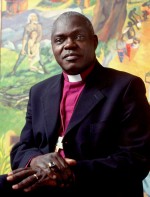
Dr John Sentamu, the Ugandan-born Archbishop of York, has shown us once more that his understanding of the tyranny of orthodoxies which we live under is bang on the money. In an interview published today he strongly criticises the BBC for its bias against Christianity, argues that minorities could not expect society to be reconfigured around them, and laments the fact that celebration of British culture is discouraged.
‘Now this country disbelieves itself in an amazing way,’ he says. ‘It almost dislikes its own culture. It doesn’t realise that the arts, music, buildings have grown out of a strong Christian tradition. John Betjeman would be shocked that the nation is not interested in helping preserve these things.’
The urban liberal elites were firmly to blame. ‘They see themselves as holding the flag for Britain and that Britain is definitely secular and atheist. I want them to have their say, but not lord it over the rest of us.’
As for the BBC, he says: ‘We (the Church of England) get more knocks. They can do to us what they dare not do to the Muslims. We are fair game because they can get away with it. We don’t go down there and say, ‘We are going to bomb your place.’ It is not within our nature.’
It’s gratifying that its Dr Sentamu is saying these things, for one simple reason: as a black man, he will be listened to with at least some degree of attentiveness by that liberal elite he so succinctly condemns. If he were white, he would be dismissed out of hand as a dangerous reactionary who should be silenced.


The Observer reports today that earlier this month David Cameron and George Osborne hosted a dinner for fifteen of the more powerful movers and shakers of the Arts establishment. Held at Soho’s L’Etoile, the event was organised by Julian Fellowes, and was attended among others by the NT’s Nicholas Hytner, Alan Yentob, Greg Dyke, the BBC’s Head of Drama Jane Tranter and Tim Bevan of Working Title.
It was, apparently, an attempt to ‘reach out’ to a powerful sector of the liberal establishment not exactly identifiable for their sympathy with anything right-leaning. It might also have been held in the hope of recruiting the future support of some famous names, in the vein of Blair’s Cool Britannia. Fellowes, after all, is perhaps the only Tory broadcasters turn to when they want an arty-farty voice from the Right, and he’s always presented in a vaguely jokey way. As an Oscar-winning screenwriter, he undoubtedly has creative credibility, but he still comes across, Boris-like, as a Woodhouseian figure from the world of country-house weekends – fluffy, jolly, solidly Tory, yet likeable.
If getting new names for future campaigns was the mission, then Cameron and Osbourne were on a hiding to nothing. Whatever they might say privately, they will never, ever be seen publicly giving conservatism the benefit of the doubt. But if, as seems more likely, the meeting was to show the totems of the chattering classes how the Conservatives have changed, and are, you know, really quite nice, and in fact, aren’t so different from you Groucho types as you might think, then the Conservatives are again betraying their traditional lack of understanding about the nature of the cultural advance of the liberal/left, and the fact that they’re facing the results not of a culture war, but a rout.
Before Thatcher, Conservatives had accepted utterly that the economic tide was inevitably socialistic. Her great triumph was to reverse this completely; it is universally accepted that the Right won the economic battles and that there is no turning back. But in virtually every other area – in education, social policy, opinion-forming and certainly the cultural and arts arenas – the advance and the agenda of the ‘progressive’ Left remained completely unhindered.
Conservatives never showed signs of getting to grips with this, largely because they simply didn’t understand it. This, unfortunately, remains the case, even if more astute social commentators and writers of the Right are increasingly coming to the conclusion that broader cultural issues – including nationhood, identity and the need to reverse slow-motion social breakdown – will be at the centre of future political battles. The Conservative Party should listen to them and go on the offensive, and not simply wait for recanting voices from the left to give their discredited sanction to such debates.
by Peter Whittle
You are invited to hear
ROBIN AITKEN
on
BIAS AND THE BBC
Monday, 11th September, 6.30 for 7pmThe Institute of Commonwealth Studies, 28 Russell Square, London WC1
RSVP at prwhittle@btopenworld.com


At Spiked Online, there’s an interesting review by Shirley Dent of the politically correct CBBC kids’ drama about 7/7, That Summer’s Day.
http://www.spiked-online.com/index.php?/site/article/1140/