HEADLINES

Showing posts with label Movie. Show all posts

Tuesday, May 01, 2007

Culture Clash tonight at 8.30 on 18 Doughty Street

Tonight we’re going to be looking at two films in which politics of one sort or another play a major role. The Lives of Others, the German winner of this year’s Best Foreign Language Film at the Oscars, explores the workings of the Stasi amongst the cultural community in 1980s East Germany. And Fast Food Nation, which is released this week, is a fictionalised adaptation of the expose of the fast food industry which bestseller for author Eric Schlosser.

With me to discuss these are the journalist and historian Ruth Dudley Edwards, and Social Affairs author Adam Smyth.

The debut feature by director Florian Henckel von Donnersmarsk, THE LIVES OF OTHERS centres on the surveillance of a George Dreyman, a playwright who, although apparently supportive of the socialist regime, is suspected of Western sympathies. He is watched round the clock by a seemingly robotic Stasi agent, who is aware too that a government minister has his eye on Dreyman’s girlfriend. Things become complicated when, moved by the suicide of a colleague, Dreyman writes an article criticising the state.

Now FAST FOOD NATION was a hit in the bestseller’s list for author Eric Schlosser when it was published a few years ago. Now, following on from the success of Morgan Spurlock’s SUPER SIZE ME, Hollywood has come up with an adaptation of Schlosser’s book– not, as you might expect, another Michael-Moore type documentary feature, but a fictionalised re-working by director Richard Linklater, centring on a group of Mexican immigrants working illegally in a meat-processing factory north of the border.

Peter's guests are Ruth Dudley Edwards, author and historian, Sean O'Callaghan, author and terrorism expert, Adam Smyth, writer, and journalist Franck Guillory.

Watch the show HERE

Sunday, April 22, 2007

Spiderman 3 - A review by Dominic Hilton

If you can get beyond the cheesy opening, the improbable hot scientist chicks with clipboards chewing their pens in the radiation lab, the inexplicably English airhead TV reporter who won’t stop barking the bleedin’ obvious into her mike all through the denouement, the snaggletoothed Kirsten Dunst singing flat, and, most of all, the deeply disturbing idea of making out in the sticky goo of a giant spider’s web (and, let’s face it, lots of otherwise horny arachnophobes will never get beyond this), there’s a lot to be said for Spiderman 3, and even more to be read into, geopolitically speaking.

First, let’s get the obligatory review stuff out of the way. Spiderman 3 is a terrific spectacle, great entertainment, and scary enough to guarantee your kids will soil their Spidey costumes. The visual effects are a knockout, the soundtrack is top-notch, Tobey Maguire is tremendous – this is a hugely 21st Century film. It’s also very funny in parts, as if the producers brought in comics for three scenes then dumped them back onto their barstools for the allegorical stuff.

The plot is a smidge disjointed – multiple villains, united only in their frustration with Spidey’s maddening habit of pooping their various parties, keep reappearing about fifteen minutes and several scenes after a seemingly fatal confrontation with the hero – but this matters not a jot. The storyline relentlessly flashes back to Spiderman I and II, which can get repetitive, if you’re looking for something to complain about. Mary Jane (Dunst) is still unbelievably annoying, and now jealous of Spiderman’s success (as I said, very 21st Century). Peter Parker’s best pal, the slightly slow rich kid Harry, still can’t stop whinging about the death of Willem Defoe, his father – and has now taken to therapeutic Cézanne copying. And the death of Peter’s maddeningly honest uncle Ben remains the thread that holds the franchise together.

Which is where it gets weird. At risk of adding a spoiler warning, it turns out that Spidey’s uncle was shot and killed because America has no socialist healthcare system. Uncle Ben’s sandy killer – whose identity has conveniently shifted to keep things ticking over – explains why he bumps people off and tears up Manhattan:

"My daughter was dying. I needed the money. I was scared."

One man’s hospital bills are killing New Yorkers. We are shown Flint Marko’s (aka Sandman’s) cute daughter with breathing apparatus lodged up her nostrils. All he wants is to get his kid the treatment she needs – and the only way he can do this is to knock off cash-loaded security vans and slaughter whoever is in his path. A world where a muscleman refuses to get a job needs a superhero.

Meanwhile, a meteorite oozing with some evil black stuff lands in the Big Apple and hunts after Spidey. It catches up with him, and turns him bad. Spidey’s suit turns black. So does his hair. It’s the same plot as Superman III, though less silly. The scene in which a stubble-covered, dirty-caped Superman perches on a barstool, shooting whisky, is, unintentionally, one of the funniest in movie history.

Spiderman 3 never quite plumbs such depths. The point about Spidey’s dark turn is explained by an online poll on the official website:

Can a man confront the forces of darkness without giving in to them? Yes/No

When I looked, 77% of visitors had voted ‘Yes’, which means only 23% of people would join Al Qaeda if they were forced to confront the evildoers. Hmmm…

Anyway, that, in a spider’s eggshell, is what this film is about: Can America defeat the forces of terror without building nude pyramids in Abu Ghraib? … No, sorry, that’s another issue. Spiderman 3 is far more explicit. Auntie May tells Peter that “revenge is like a poison” and insists Uncle Ben “wouldn’t want us living for one second with revenge in our hearts” (he’d want them dead?). As office workers fall from Manhattan’s crumbling skyscrapers and Peter fails to comprehend the French maître d’s “bon chance!”, the reference to the War on Terror will hardly be missed by your kid in his baggy-in-the-seat Spidey costume.

So what, then, is Spiderman’s strategy for the War on Terror? I’m not entirely sure of my ground here, but I think it involves a good sprinkling of forgiveness and a large spoonful of capitulation. The original Spiderman movie, an eager friend of mine insists, was infused with the spirit of the Aeneid (or Adenoid, as my computer spellchecker would have it). The message of the first two instalments was “with great power comes great responsibility”. This was not to suggest that Peter Parker need use his powers ‘proportionately’; it just meant he had to use his powers in whatever way necessary, and so quit hanging out at the mall with teenage girls in low-cut tops. But that was then. Spidey III is war-weary. Three major lessons are drawn in the finale:

First, never humiliate your enemy, for he will quickly humiliate you back, and then we’ll all get caught in a vicious cycle of humiliation (etc.). Peter/Spidey makes this mistake with Eddie Brock, a singularly obnoxious squirt who nicks Parker’s photography job at the newspaper by photoshopping some snaps of Spidey knocking off a bank. Peter exposes him, rightly gets him fired, steals his big-chested girlfriend, shoves him up against a wall and tells him, “If you want forgiveness, get a religion.” The result of this ‘error’ is that, weirdly, Brock heads to the local church, kneels in front of Christ, and says, “I want you to kill Peter Parker.” Christ doesn’t deliver, but Brock gets gunged by Spidey’s evil black stuff and turns into Venom, a nasty little screaming shit of a villain who can’t bear the sound of church bells (you’ll just have to go see it), and sets about slaying Pete himself.

Second, not even America… sorry, not even Spiderman can act unilaterally against multiple enemies. We are treated to a multilateral finale, in which Spidey saves the day (in front of a crisp Stars and Stripes) thanks to the support of an ally, who is meant to represent… Who knows? In the real world nobody but America and the terrorists is serious about arming themselves.

Finally, and this is the big one, America must make more of an effort to understand its enemy. The concluding confrontation between Spidey and his uncle’s killer goes like this:

Uncle Killer: “I’m not asking you to forgive me. I just want you to understand.”
Spiderman: “I’ve done terrible things too. I forgive you.”

As a consequence of Spidey’s forgiveness, the baddy evaporates and becomes good. The lesson is obvious: Forgive Al Qaeda and they will just evaporate into thin air. Easy.

Not to read too much into it all, of course… There is quite a lot of the earthy, crunchy thing, though not enough to make it unbearable: Dunst disapprovingly refers to a blonde hottie’s “polished fingernails”; the silver-haired Auntie May revels in her lack of make-up and pathetically small diamond engagement ring; Peter uses a payphone in the hallway of his immigrant landlord’s slumhouse and in a moment of ‘badness’ complains about paying rent given how the door to his hovel never opens.

Indeed, Dunst’s MJ is a real moody cow and Peter/Spidey should dump her asap. She spends the whole film screwing up our superhero’s life and behaving like she’s on Oprah’s sofa. You know the form: “Try and understand how I feel. I look at these words [an honest review of her pitiful singing voice] and it’s like my father wrote them.”

Please don’t go there! The woman proceeds to cheat on Peter only minutes after breaking up with him, then triggers Harry’s (thankfully lost) memories and aids and abets Spidey’s enemy by luring Peter into a trap. Plus, this time there’s no wet t-shirt scene. Spidey can, and almost does, do better than this frump.

Ultimately, the film relies on you being the type of moviegoer who worries about American power and arrogance. If, like me, you have a crush on America’s cockey swagger, something strange happens: You end up preferring Spiderman when he is supposed to be ‘bad’ and feel disappointed when he returns to being a humble, unpaid do-gooder. The scenes when Spidey ‘turns to the dark side’ are the best fun of all, and hilariously played by Maguire. He becomes a dude, strutting and moonwalking down the sidewalk, letting his hair go floppy, picking up babes, playing jazz piano, beating up bouncers, and hanging out with blacks in jazz clubs! We are supposed to frown on his fun-time behaviour (and in the real world war, of course, the enemy certainly wouldn’t drink with curvy blondes in decadent jazz clubs…). But if this is supposed to represent America showing off to the world, reserve me a table at that gin joint. After all, what is the FX-laden blockbusting Spiderman III if not America showing off to the world? We love it, and Hollywood really must stop pretending it is something it is not.

© Dominic Hilton, 2007

Monday, April 16, 2007

IN THE PAPERS / The Lives of Others - A chilly and controversial study of a Stasi snoop for James Christopher in The Times


The Lives of Others has caused the most delicious trouble since winning Best Foreign Language film at this year’s Oscars. Few critics expected this modest thriller about the East German Stasi to lift such a glamorous award.


No one anticipated the film’s extraordinary reach. Not least, the young — aged 34 — first-time director, Florian Henckel von Donnersmarck. His Oscar triumph should have earned him a firework display, a team of nubile cheerleaders and a nifty title (Count, perhaps) to add to his preposterous name.
But The Lives of Others has put the fear of God into the German cultural establishment. It rips the stitches from memories that are still fresh and deep.
The film opens in East Berlin, in a Stasi cell in the Hohenschönhausen detention centre in 1984. Captain Gerd Wiesler (Ulrich Mühe) tapes the interrogation of a hapless dissident for the benefit of his latest dull class of aspiring secret policemen. He is quite brilliant at his job. He is as dispassionate as Sherlock Holmes while crushing Watson, and as giving as a cement wall. The purity of Wiesler’s logic is actually hypnotic. There is a mad science about his methods that makes shocking playground sense.
The plot is as simple as an opera charge sheet. A plump and seedy minister for the arts falls for a famous actress with a drug habit. He orders his lieutenant to bug the flat she shares with her fashionable playwright boyfriend. Wiesler is duly charged to drag up the necessary dirt. Under “Operation Lazlo”, he litters their apartment with secret microphones and moves into the attic to spy on their every twitch.
Against every trained fibre of his highly tuned mind he starts falling in love with Martina Gedeck’s voluptuous actress, and sympathising with Sebastian Koch’s idealistic writer. The mission to nail this pair of errant artists turns into a desperate soap to save them.
This is where most East German survivors and commentators parted company with von Donnersmarck’s melodrama. The idea of a Stasi officer with the wit to dream up this kind of redeeming scenario is apparently beyond the pale. For my money it doesn’t lessen the power of the film one jot.
An alarming sense of guilt has been hoisted on to The Lives of Others. Almost because it touches truths that every other East German film in recent years has been desperate to avoid, or treats with rough-and-tumble irony. This has resulted in a slew of films called “Ostalgie” (a pun for which the literal meaning is “nostalgia for the East”).
What distinguishes von Donnersmarck is that he clearly has the courage of youth on his side. He remembers growing up in Berlin (though he is in fact from Cologne) with family on both sides of Checkpoint Charlie.
The provincial pluck of his script is the refusal to dilute the paranoia that he witnessed as a child crossing the border to visit relatives in the East. It’s a bravery singularly lacking in German directors who ought to know better.
The eerie pleasure of Mühe’s performance is how much we empathise with his drab and hollow spy. We are unwittingly captivated. The entire grubby history of Cold War surveillance is etched on his face. The eyes are ancient. The mouth is tight and unsmiling. The creases haven’t been oiled in decades. Wiesler’s most intimate moments are spent with his head mournfully buried between the breasts of a clock-watching prostitute.
Yet the taboo drama is how skilfully the film gets under his skin. He is a man whose entire life has been distilled into details: the endless typewritten reports; the “odour jars” used to capture a suspect’s scent; the metal steamers that can open 600 letters an hour; the warehouses full of well-thumbed files.
The disillusion is perfect when he discovers that Operation Lazlo is simply a means to satisfy a Central Committee member’s sexual urges.The plot chimes queasily with the broadsheet frenzy about our new surveillance society, and the ubiquitous evils of coast-to-coast CCTV.
What doesn’t ring entirely true is a Stasi officer who undergoes an angelic change of heart. This is a harsh leap, and arguments still rage about whether or not unsuspecting audiences should be allowed to take it. But the atmosphere of the film is exquisitely 1980s. The cruel backdrops are marvellous shades of grey. There is a bruising beauty about the relationship between Gedeck’s doomed actress and Koch’s unselfish writer. And a savage cynicism. Few films have dared paint East Germany and its legions of demons in such honest and unsparing detail. Von Donnersmarck puts a pickaxe into the past.


From The Times


If you've seen The Life of Others, please share your thoughts with us.

Tuesday, April 10, 2007

Military matters on Culture Clash


With military matters dominating the news, tonight we’re going to be discussing the media coverage surrounding the release last week of the fifteen Royal Navy hostages, from their capture right through to Faye Turney’s television interview last night with Trevor MacDonald. And we’re also going to be asking whether Channel 4 should postpone indefinitely it’s already once delayed, controversial drama about British troops in Iraq, The Mark of Cain.

With me to tonight are Damian Thompson, editor in chief of the Catholic Herald and leader writer for the Daily Telegraph, Petroc Trelawny, journalist and Radio 3 presenter, Marc Sidwell of the New Culture Forum, and Andrew Haydon, critic for Culturewars.

But first, we’re going to look at a new film which recalls a past military controversy. Days of Glory, which looks at the role played by the Arab and African colonies in the French Army during World War II, centres around four soldiers who, in fighting for a country they have never even seen, encounter prejudice and unfair treatment from the French military hierarchy. The film, which won the four actors a shared Best Actor award at Cannes last year, prompted President Chirac to make a change in the law, under which, previously, pensions to such soldiers had been stopped once their countries were granted independence.

Watch it on18 Doughty Street Talk TV at anytime

Monday, April 09, 2007

300—the most civilised film in decades, writes Marc Sidwell


Frank Miller’s bold and bloody reinvention of the Battle of Thermopylae hits British cinema screens this week, fresh from two record-breaking weekends at the American box office. Certificate 15 (‘R’-rated in America) this is a violent and at times sexy film aimed at a youth market. From its takings, the producers did not mistake their fan base.

The film is an unrelenting, two hour epic remythologising the historical record. Frank Miller’s graphic style is brought to vivid life thanks to groundbreaking use of blue screen technology, supplemented by influences from Peter Jackson’s Lord of the Rings trilogy. For those whose stance is instinctively ironic and cynical, the straightforward heroism celebrated here will be disconcerting. For those who know the value of sacrifice and the price of freedom, the experience is thrilling. This is a modern film that reconnects with the essence of Western civilisation.

For what makes this film exceptional are the classical foundations upon which it draws – the American scholar, Victor Davis Hanson, was a consultant – and the resonance they evidently have with a fresh generation of westerners, officially unschooled in Herodotus and Homer. If our education system has given up on the value of a classical education, the runaway success of 300 proves that the values of the mass of the West remain those of Ancient Greece, even in the Age of Barbie. Freedom, Beauty, Excellence and Reason are all celebrated here—four exceptional touchstones of the West that come to us from tiny Greece, thanks to the resistance of the Spartans.

One of Miller’s sources was an essay by William Golding, ‘The Hot Gates’ – a literal translation of Thermopylae. Golding reminds us of simple historical fact: ‘A little of Leonidas lies in the fact that I can go where I like and write what I like’. When the freedoms to write what we like and go where we like are once more under threat, it is no surprise that Thermopylae should return to inspire us. The West, for all our forgetfulness, is one civilisation, stretching back two and a half thousand years to the shining example of Greece. The last time the Spartan epic was re-enacted, it served to stiffen sinews in the Cold War.

300 reminds us too that for all the current misperception of America as global bully, the West is in truth the eternal underdog. In a world always ready to fall back into tyranny and superstition, only the Greeks and their inheritors know the value and the power of individual human beings. When we are set free, we can bring down giants, but we always play David to the world’s Goliath. Refusing to kneel before the Persian horde, Gerard Butler’s Leonidas and his buffed-up men are an army of Michelangelo’s Davids. They are simultaneously the progenitors and inheritors of the best of the West. Their reception in 2007 is proof that ordinary westerners retain a sense of their civilisation and its essential values. Our elite gatekeepers may find the unofficial western motto—freedom or death; war is not the worst of evils—hard to grasp. 300 shows that everyone else gets it. There is hope for us yet.


Tuesday, March 27, 2007

Tuesday, it is Culture Clash day - 8.30 pm on 18 Doughty Street Talk TV

Tonight, we’re going to be taking a retrospective look at two successful British films, now out on DVD which, in their different ways, provided much discussion about the very different political and cultural issues they explored, when they were released in cinemas last year: THE QUEEN, which even the Martians must know won Helen Mirren an Oscar last month, and CHILDREN OF MEN, an adaptation of the PG James novel, which starred Clive Owen in a tale of a dystopian Britain set in the year 2027.

With me to talk about these are FT and Jewish Chronicle journalist Francesca Segal, Adam Smyth, who’s currently writing a book about the Mohammad cartoons, the South Bank Show producer Susan Shaw, and social entrepreneur Simon Marcus.

First off, Stephen Frears’s THE QUEEN deals with the relationship between the monarch and Tony Blair, played by Michael Sheen, during the week following the death of Diana Princess of Wales, and focuses on the attempts of the new, highly popular Prime minister to reconnect the Queen with the public at a time when the monarchy appeared to have seriously misjudged the national mood.

Watch here

Thursday, March 22, 2007

'300' reviewed on Culture Clash

Based on Frank Millar’s graphic novel, which was itself inspired by the film The 300 Spartans, 300 tells the story of the battle of Thermopylae in 480 BC, in which King Leonidas, played by Gerard Butler, leads his men in a stand for freedom against Xerxes and the mighty Persian army. The film, which like Millar’s Sin City, is shot as a kind of hybrid between real action and animation, has been accused by expatriate Iranians of being ‘irresponsible’, a distortion, and ‘an assault on its culture and tradition.’

With Peter Whittle to discuss these are Dolan Cummings of Spiked Online, Dawn French of the New Criterion magazine, Andrew Haydon, critic for Culturewars, and Marc Sidwell of the Henry Jackson Society.

Watch a clip


and the full programme here

Tuesday, February 20, 2007

Does Hollywood propagate a Liberal agenda? Culture Clash tonight at 8.30 on 18 Doughty Street


With the Oscars coming up, and Al Gore hotly tipped to walk away with a statuette for his documentary An Inconvenient Truth, tonight we’ll be looking at the broader picture and asking whether Hollywood and the film industry in general promotes a liberal, anti-republican, anti-conservative message.

This is not a new topic of course; more than a decade ago, the critic Michael Medved got many liberals hot under the collar with his book Hollywood vs America. In that he accused tinsletown of being anti-religion, anti-family and anti-patriotism – a case rigorously opposed by those who see cinema as the most right-wing of the arts. But are those who see Hollywood as being one of the main components in US cultural imperialism confusing the fact that Hollywood is the most commercial art form with the kind of messages it carries?

We’ve got used to the fact that whenever a President is portrayed in a movie, and he’s a sympathetic character, it’s invariably implied that he’s a Democrat. Corporations are usually villains too – in the recent remake of The Manchurian Candidate for example, communist brainwashers were replaced by the titans of big business. But what are we to make of the subtler social messages and political subtexts carried by Hollywood movies?

With me to discuss this are the producer and writer Carol Gould, Dr Steven King of Policy Exchange, Susan Shaw, producer of the South Bank Show, and 18 Doughty Street’s own Tim Montgomerie.

Watch it here

Sunday, January 14, 2007

We're gonna need a bigger mantelpiece - Sunday Times


A new year, a new round of gongs. But if it's raining prizes, who are the real winners, asks PETER WHITTLE

‘Everybody has won’, said the Dodo at the end of the race in Alice in Wonderland, ‘and all must have prizes.’ So what’s yours? If you’re reading this, probably not McDonald’s Employee of the Year, but you might well be the winner of an advertising industry gong, or be hairdresser or marketing man of the year. You might even be the recipient of one of the world’s hundreds of literary awards which now bubble away anonymously under the Goncourt and Booker; as Gore Vidal pointed out, there are now more American book awards than writers. And if you’re an independent film director, you should count yourself a slouch if, having done the rounds of the ever-increasing festival circuit, you find you still cannot start the new year with the words ‘award-winning’ preceding either your name or your latest labour of love; there are now more American film awards than there are movies to go round.

We are about to enter what used to be called the awards season. This week sees the announcement of the nominations for the BAFTAs, with the ceremony following next month, and, as it is their sixtieth anniversary this year, we’re promised a brand new host and venue. In a couple of weeks there are the South Bank Show Awards, mere babies by comparison, and at the end of February, the grand-daddy of them all, the Christmas of the awards kingdom, the Oscars. But such has been the proliferation of awards ceremonies in the past couple of decades that the very concept of a season – just like the morning rush-hour - is obsolete: the traffic keeps coming all year round.

The giving of prizes dates back to the Greek drama and arts competitions of the 6th century BC, but it was during the last century that ‘creative’ awards moved onto sports territory and became such a dominant feature of mainstream culture, with the first Nobel Prize for Literature appearing in 1901, the Goncourt a couple of years later, and the Pulitzers, the Oscars and Emmys all well in place by mid-century. But it’s since the 1970s that awards – always aping the fake grandeur, suspense and trappings of the Oscars ceremony - have sprung up to reward ‘the best’ in virtually every branch of human creativity and industry. The phenomenon has even been the subject of academic inquiry: in his study The Economy of Prestige: Prizes, Awards and the Circulation of Cultural Value, the American academic James English wrote that we are witnessing ‘a kind of cultural frenzy, with scarcely a day passing without the announcement of yet another newly founded prize.’

We feign a world-weary cynicism about awards. Half the time we think they’re fixed. The actual achievement being celebrated might not match the razzle-dazzle pyrotechnics of a televised ceremony – such as with the recent, absurdly grandiose BBC Sports Personality of the Year show. Yet we watch in our millions. Why are we so obsessed with giving, receiving and speculating about who wins what?

Much of it comes down to money. Certainly founding an award can offer an instant PR solution in an increasingly crowded commercial landscape, whether you are Costa Coffee, which now sponsors what was formerly the Whitbread prize, or Orange, which started the woman’s challenge to the supposed domination by men of the Booker prize. And it can supply a gravitas which maybe wasn’t there before, such as with the Empire magazine film awards. ‘With information overload, and with the increasing fragmentation of commercialism, awards are all about standing out,’ says Amir Amirani, who made a BBC documentary about the awards phenomena. ‘It’s all about visibility. Prizes are increasingly about the giver rather than the receiver – the giver can draw cultural capital from the receiver. Very rarely is it altruistic.’

There can be little doubt too that in the case of the winner, there can be huge financial benefits, although this depends on where your award falls in the hierarchy of prizes. BAFTAs might be good for prestige and can certainly be useful in your movie’s PR campaign, but their effect on box office is minimal. The Oscars are a different matter. A win can massively increase your box office, so much so that film distributors increasingly market their best products around the time when nominations are announced. Winning Best film makes little difference to a blockbuster like Titanic, but can dramatically improve the take for more esoteric fare; American Beauty for example saw its $80 million total increase by a further $50 million after it won its Oscars.

John Fletcher, Managing Director of film distributors Pathe, offers another example of how smaller films benefit. ‘One of our films, The Pianist, made £1.5 million in the UK when it was released two months before the Oscars in 2003. After Adrian Brody’s win, it doubled its box office.’ Fletcher’s big hope this year, Stephen Frears’s much praised The Queen, has already made nearly £8 million in the UK, but will certainly be reappearing in cinemas should the expected gongs materialise.

The less grubby arts have taken Hollywood’s ethos on board. In the era of the critically acclaimed but unread novel, a big literary prize means far greater sales – Alan Hollinghurst saw his increase tenfold (along with a highly publicised TV adaptation) after he won the Booker two years ago for The Line of Beauty. And even when money is less of an issue, winning can mean elevation to the ranks of a certain sort of celebrity for individuals once only familiar to the cognoscenti. Grayson Perry was unknown before the Turner Prize; now he has a column in the Times, his opinion is sought on Newsnight review and he is snapped in his frock by paparazzi at, yes, award ceremonies, for the benefit of readers who’ve never clapped eyes on his vases.

The importance of the commercial imperative in prize-giving is underlined by the gradual disappearance of theatre award ceremonies from mainstream broadcasting. After years of TV coverage, the Oliviers are now nowhere to be seen on the terrestrial channels – plays cannot, after all, be bought on DVD, and the guests and nominees likely to attend are probably deemed not to be sufficiently of the ratings-pulling Hello variety, unlike those at the British Comedy Awards or the spurious-sounding National TV Awards.

But the proliferation of awards is not all about the bottom-line. It can’t just be a coincidence that they have become so dominant during an era which has seen an odd alliance between the populism of the marketplace on the one hand and the effects of cultural relativism on the other. The claim that creativity cannot and should not be judged like the 100 metres is arguably harder to sustain when the received wisdom of the past thirty years has been so resolutely ‘anti-elitist’. If you demolish one set of yardsticks, new ones - however superficial - have to emerge if the whole thing isn’t to collapse. This need for some kind of order in the information age, together with the marginalisation of traditional criticism, might explain the attraction of awards for those of us who watch and wait for the opening of the envelope, just as it might account for TV’s love affair with endless list programmes, which in their own way amount to kind of prize-giving.

Not that the trophies themselves are the last word. In the US, an outfit called The Award Recognition Association gives out gongs at its yearly convention for Best Award. Best Audience is surely only a vote away.

From The Sunday Times

Saturday, January 06, 2007

This Tuesday on Culture Clash…


18 Doughty Street’s alternative to Newsnight Review, hosted by The New Culture Forum’s Peter Whittle, starts the new year at 8.30 on Tuesday with a discussion on the forthcoming film about Idi Amin, The Last King of Scotland, the recent This Life reunion programme and the BBC’s latest attempt to revive Cathy Come Home, Born Equal. Chewing the cud will be Damian Thompson of the Daily Telegraph, James Delingpole of The Spectator, Susan Shaw of the South Bank Show and writer and commentator Douglas Murray.

Sunday, December 03, 2006

Let's laugh at it, that's my attitude...

In The Daily Mail, Jason Lewis reveals how Borat sparked panic in the Foreign Office:
'For a year diplomatic channels between the British Embassy in Kazakhstan and the Foreign Office have been filled with agonising over how to deal with the fictitious Kazakh journalist created by comedian Sacha Baron Cohen.

Much of the correspondence remains secret - deemed by Foreign Office officials as 'likely to prejudice relations between the United Kingdom and Kazakhstan'.'

The Daily Mail

All is well that ends well.
In an interview to the French sunday newspaper, Le Journal du Dimanche, a travel agency manager tells that he has noticed a strong increase in customers' requests for holidays in Central Asia. Kazakh officials should publish an ad in Paris explaining that spending their strong euros in the Great Nation is the best way to stand against the Great Satan. Some French so keen to express their anti-Americanism would rush to Almaty or Astana - wherever it is.
How do you say comic in French?

More on Borat - Is It Because They Is American?

Sunday, November 26, 2006

Hello and welcome to Culture Clash.


You're watching 18 Doughty Street, it's 8.30pm on Tuesday, November 28th

This week, we’ll be asking, is James Bond really alive and well and living in the 21st century? As CASINO ROYALE gets mostly rave reviews and a massive take at the box office on its first weekend, we’ll be discussing whether Daniel Craig really has given 007 a new lease of life.

Also, as work gets under way on the new Armed Forces memorial in Staffordshire, we’ll be looking at the state of statues in our public places. Artist Ian Rank-Broadley’s traditional sculptures of groups of soldiers will be at the centre of this new memorial, and already look like proving popular with the public. But are they really just kitsch? As Alison Lapper Pregnant gets ready to make way for another conceptual piece on the fourth empty plinth in Trafalgar Square, we’ll be exploring whether we get the memorials we deserve.

And, as The Catherine Tate Show is joined on TV by a new series of Tittybangbang and the appearance last week of Pulling, both on BBC 3, we’ll be asking whether women are really changing the face of comedy.

Peter Whittle's guests today are Helen Hawkins, Editor of the Sunday Times Culture, writer and humorist Dominic Hilton, James Delingpole, TV critic of the Spectator, and Franck Guillory of The New Culture Forum.

Monday, November 20, 2006

It's on 18 Doughty Street, it's on Tuesday, it's... Culture Clash


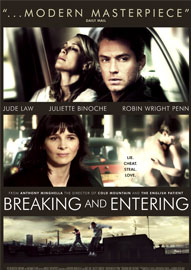
This week on Culture Clash, we’re going to be looking at a film which, if you are to believe the posters, is a ‘modern masterpiece’ – director Anthony Minghella’s Breaking and Entering, an exploration of love and crime in multicultural Kings Cross.

And we’ll be discussing a book which is the hottest political read in the US and Canada – America Alone: The End of the World as We Know it, by the self-styled global content provider, Mark Steyn.

Peter Whittle's guests are Nick Seddon, writer and research fellow at Civitas, Dawn Steeves of The New Criterion magazine, writer Kristin Veblen and Douglas Murray, author of Neoconservatism:Why we need it.

18 Doughty Street

Saturday, November 18, 2006

Eyes Wide Shut


Comments on Minghella's Breaking and Entering

The reason Hollywood will always ultimately triumph over European film is simple: it understands our need to aspire, to dream and to see human life reflected on a larger, more fantastical scale than humdrum reality. Europe on the other hand puts its trust in what it sees as real life. That can be great of course, even if, more often than not, what European movies are actually portraying is a contemporary brand of nihilism which passes for depth.

But European and British films are certainly not averse to the odd fantasy. It’s just that we tend to dress them up in the guise of gritty, searing dramas with something to say about the state-of-the-nation. One such is Breaking and Entering, director Anthony Minghella’s just-released tale about an affluent North London architect (Jude Law) whose security and Sunday supplement life with his cool Swedish wife (Robin Wright Penn) are threatened when he begins an affair with a Bosnian refugee (Juliet Binoche), who’s eking out a living as a seamstress with her delinquent son in sleazy Kings Cross.

The multicultural setting is reminiscent of last year’s Oscar-winner Crash. It all looks very good, in the way that Crash looked good. It’s beautifully shot (but then so are most films these days), and the characters are aesthetically pleasing, even if Law’s vanity, which seems to be increasingly hindering his performances lately, proves to be a real encumbrance here. It’s sort of pleasurable to watch these people glide from scene to scene. But behind the posturing and interior-designed settings, there is actually nothing there at all.

Crash was sold on its supposed fearlessness in telling it like it is on the race issue. It did nothing of the sort of course, basically coming down on the dippy side of Love is all You Need and I’d Like to Teach the World to Sing. Breaking and Entering seems likewise to be claiming to have something to say, but gets around the fact that it hasn’t a clue quite what by indulging in wish-fulfilment and obfuscation. Law’s character gets angry when his firm is repeatedly broken into, but not that angry. He and his wife never exchange so much as a word about the political or social landscape changing around them. Binoche is a beautiful and grateful refugee simply striving to make an honest buck. The cleaner at the firm, also an immigrant, who’s originally suspected of the break-in, quotes Kafka. The grizzled Cockney cop (Ray Winstone) quotes Einstein. Everybody seems to be acting with the best interests of others at heart. And there isn’t a single believable emotion or reaction in the whole two hours.

There’s certainly a market for pictures about people self-absorbed by their lack of fulfilment. But Minghella has set his film firmly in a multicultural milieu which, given the current climate, could only be wilfully ignored, so he must be trying to convey something with it. But he is either too polite or too removed from reality to ask any real questions. What we have instead is a kind of liberal massaging of the situation, with introspection and nuance taking the place of anything which might generate any genuine heat.

Worst of all however, is the avoidance of the real issues which result from sudden mass immigration. Law and his family are rich and privileged, the burglar poor and deprived. It’s a case of have and have-nots, you see. Except in the real world, it isn’t. The affluent can continue to insulate themselves; the real struggles, dislocation and social breakdown happen down there, on the ground. It would be good if somebody made a film about that. But I wouldn’t hold your breath.

PW

Monday, November 06, 2006

Is it because they is American?


The majority of critics, with the noble exceptions of Matthew Bond in The Mail on Sunday and Phillip French in the Observer, have been wetting themselves over the Borat movie, which opened last week, although from the mountain of press it has received it seems to have been with us for months. The effect of all this hype has been to deflate most of the gags – seeing it this weekend, it all felt awfully familiar.

More importantly, the film fails in what was surely its main aim – to ridicule any American unfortunate enough to fall into Baron Cohen’s trap. Other than some chilling scenes at a rodeo, and a crass fraternity party which was obviously set up, all the people he meets are unfailingly polite, non-judgemental and open to him as an outsider. In particular, a group of feminists show quite remarkable restraint in the face of imbecilic provocation, and a dinner party group similarly behave with the utmost civility even when faced with the character’s unspeakable rudeness.

So the joke – hey, look at these dumb Yanks – rebounds completely, and in an odd way, ends up at the expense of the European audiences watching. Could this be why, at the end of the screening I went to, there was an oddly mirthless, joyless atmosphere?

PW.

More posts on Movies

Sunday, November 05, 2006

Sir Michael and the Dragon


With his latest film, The Prestige, about to be released, Oscar-winning actor and all-round icon Michael Caine has said some interesting things about being English in Saturday's Times magazine. Here's an extract from the interview, published under the title 'England expects':

“I am very, very patriotic. Don’t get me started,” he warns. He frets that his beloved England is being overlooked as the other home nations enjoy devolution. His friend Sir Sean Connery has become a cheerleader for Scottish nationalism and Sir Michael is beginning to think he’s right. “I’m a very English man. And that doesn’t mean to say I don’t like foreigners and I hate all immigrants. I’m married to an immigrant. But I am not happy at the moment. Everybody seems to be represented but the English.

“There’s a possibility that a Scotsman is going to rule over me. A Scotsman who comes from a constituency where my member of parliament, who I elected, has no say whatsoever. And there is an answer, given to me by my friend Sean: give Scotland its independence. Gordon Brown can be the prime minister of Scotland.”

“And I’m worried about the fact that they (the Scots, of course) cheer for the other side in the football and I think to myself, ‘Have they really got my interests at heart?’”

How truly refreshing it is to hear such a big name championing a cause which is obviously genuinely close to his heart, and which hasn't been carefully picked from the basket of right-on issues which celebrities usually go to when they need to perk up their cred.

Full interview in The Times

FG

Monday, October 16, 2006

18 Doughty Street TV: This week on Culture Clash


On wednesday evening, Peter and his guests will be discussing:
. The Queen, Stephan Frears and Peter Morgan's take on the week Diana died;
. History Boys, the film by Alan Bennet's play put on the large screen by the National Theatre's director Nicholas Hytner;
. Royalty, Jeremy Paxman's last book

And Thatcher, The Musicals with a report from the Premiere at Oxford.

You've seen it or you've read it... Why not sharing you views with us?

Tuesday, October 10, 2006

Death Wish


Death of a President, the much publicised programme shown on More4 last night, was well made, glossy and expensive-looking. It cleverly combined real footage with drama, even if there was the usual problem of actors unconvincingly playing talking heads.

But what a nasty show. Half way through, one found oneself thinking: why am I watching this?

It was ultimately, a big slice of wish-fulfilment fantasy. One can imagine the original pitch for the project taking place: Bush is assassinated, it’s what everyone wants after all, so big audiences.

In many ways this spiteful and childish exercise proved the utter emptiness and moral and intellectual bankruptcy of anti-Americanism, which in Europe at least has become almost rabid. Turning on your friends, or, even worse, on yourself (which is what in essence anti-Americanism is) is the most cowardly and impotent response to the threats from outside. This programme was, in cultural terms at least, something of a high watermark in self-delusion.

Sunday, October 01, 2006

Peter's Sunday Times film shorts

CLICK


Cert 15, 107 mins

Mentally impaired and proud of it, the latest Adam Sandler comedy to grace our screens has all the humping-dog and fart jokes we’ve come to expect from anything associated with this talentless, unpleasant performer. But this effort – about an overworked architect who gets the chance to change his life with the aid of a magical remote controller – goes one further and tacks on a good half hour of sentimental guff about missed opportunities and the importance of family life. Both the kitsch value of David Hasselhoff and the familiar shtick of Christopher Walken are defeated by Sandler’s ego, which ensures he’s in every scene. It’s left to Frank Coraci to move the cameras around.

One star.


ECHO PARK L.A


Cert 15, 90 mins

This slight but good-natured indie follows the troubles of two Mexican teenagers – one pregnant, the other gay – against the backdrop of their strictly traditional community in a shoddy part of LA which is being gentrified by incoming whites. Magdelena (Emily Rios) is dour but resourceful, Carlos (Jesse Garcia) a muscled but monosyllabic gay fantasy, and although their problems are deeply unoriginal, directors Richard Glatzer and Wash Westmoreland manage to make us care enough not to be bored. Magdelena finally manages to turn things to her advantage, but Carlos is left hanging somewhat; he should travel the couple of miles to West Hollywood, where I guarantee he’d be set up for life within a week.

Three stars.


JOHANNA

Cert 15, 86 mins.

This is a Hungarian, operatic re-telling of the Passion of St.Joan, set in a modern hospital, so we’re talking serious niche market appeal here. Johanna (Orsi Toth) is a junkie-turned-nurse with the power to cure male patients through sex (female ones presumably fall by the wayside). Outraged, the doctors attempt to silence her. They should have tried harder. The crushingly gloomy scenario in director Kornel Mundruczo’s film is systematically un-enlivened by Zsofia Taller’s undistinguished music, and even if you’re prepared to swallow the modishly anti-science, pro-superstition message, you must really be seeking novelty for its own sake if you manage to make it to the end of this dirge.

Two stars.


MOUNTAIN PATROL

Cert 15, 85 mins.

Director Lu Chuan takes a parochial topic - the illegal poaching of Antelopes in the Chinese wilderness - and treats it with majesterial grandeur. However, wonderfully photographed landscapes and handsome Tibetan faces don't adequately compensate for the long-winded narrative, which we see unfold through the eyes of a reporter sent to cover the anti-poaching patrol. Ultimately, you have to be an antelope to really care.

Two stars.


NINA'S HEAVENLY DELIGHTS

Cert PG, 94 mins

Boy, does this movie celebrate diversity. Director Pratibha Parmar's gloopy, tedious and smug comedy follows the burgeoning feelings between Scottish-Asian restauranteur Nina (Shelly Conn) and Laura (Lisa Mackinlay), as they prepare for a TV curry competition. Scottish reels, gay Bollywood dancers and all-round shiny-eyed tolerance are thrown into the mix, leaving behind a distinctly queasy feeling.

One star.

If you've seen these movies or the other releases of the week, what are your thoughts?

Monday, September 25, 2006

Children of Men, the movie


When did movies stop looking at the future with wonderment? 2001: A Space Odyssey was perhaps the last time the infinite possibilities of years to come were depicted as inspiring and expansive. In the last four decades, dystopia has reigned supreme on the big screen, and the time focus has got shorter and shorter. Now we look forward, myopically, only a few decades at a time, and what we see is so appalling it’s no wonder we desert the wider world and take refuse behind our iPods and computer screens.

Director Alfonso Cuaron’s just-released Children of Men (Cert 15), which is loosely based on PD James's novel, is the latest attempt to draw conclusions about the future from the mountainous problems of the present. And like so many other examples in this genre, the assumption underlying the whole story is that, in the interim, we have proved utterly powerless in the face of the chaos brought by complete social breakdown.

Cuaron’s film is of interest mostly because of the picture it paints of everyday life in Britain in 2027. The weak story comes a poor second. Women have been made infertile (possibly by a massive flu epidemic), no children have been born for 18 years, an authoritarian government is in charge and Britain is besieged by illegal immigrants who are kept in cages at ports and rail stations. Clive Owen plays a burnt-out, passive bureaucrat (reminiscent of Orwell’s Winston Smith) who is persuaded by a terrorist gang to help the escape of a young woman (Claire-Hope Ashitey) who somehow, miraculously, is pregnant. Hunted down by competing forces, Owen’s character finds himself acting heroically in the midst of gun battles despite a seeming lack of either conviction or compelling motive. It is, in effect, simply a chase movie.

But the background scenario is plausible in many ways, and in its details and atmosphere is thoroughly convincingly depicted. London still has its red double-deckers, but they are covered in moving video ads, albeit far grubbier and washed-out than those in Bladerunner. Random bomb explosions rock the streets. People look roughly the same, only their expressions are even more defeated and passive than can be seen now on your average commuter journey. Disposable euthanasia kits (‘Quietus - You decide When’) are sold over the counter. Groups of feral kids attack trains with rocks, and passengers barely turn a hair. Everywhere, people are encouraged by disembodied voices to report illegal immigrants.

However what makes all this imaginative production design finally hollow is the utter vagueness of the film’s political dimensions. We’re left in the dark about the political make-up of the predictably ‘fascist’ government; the terrorist group, maybe environmentalist, maybe anarchic, maybe simply ‘humanist’, seems to have little agenda. The immigration problem which features so largely is emotionlessly portrayed - we’re not quite sure whether we’re meant to view the obviously inhuman treatment of these arbitrarily imprisoned (and apparently mostly Eastern European) refugees as the cause of the turmoil, or the result of it. All this makes it hard to become more than merely superficially involved.


And yet at the same time, it is this very vaguenes which makes the film interesting when viewed from our beleaguered present. We’ve become used to seeing a largely left-leaning vision of the future where the corporations are the root of all evil (as in Rollerball), or where a specifically right-wing Tory government crushes all dissent (the absurd V for Vendetta), or more weirdly still, where past liberal battles are played out paranoically as though they’re still being fought (the ghastly and pointless remake of The Stepford Wives, or The Handmaid’s Tale). But the ambiguity of Children of Men reflects not just the loosening of labels, and perhaps the death of genuine political debate, which characterises our own times, but the free-floating anxiety which consumes those who would still identify themselves as being of the Left and Right. Both points of view could find support for their arguments in the film’s portrayal of a multi-cultural London in the midst seemingly of a slow-motion civil war, and certainly the central conceit of an infertile population could be seen as a metaphor for Europe’s catastrophically plunging birth-rate. What, finally. touches a highly-exposed nerve is not just the sense that, despite the ceaseless efforts of the capital’s boosters, London is recognisably already on the way to this nightmare vision, but that social and moral fragmentation has led to an overwhelmingly nothingness at the very centre of things.

Peter Whittle